




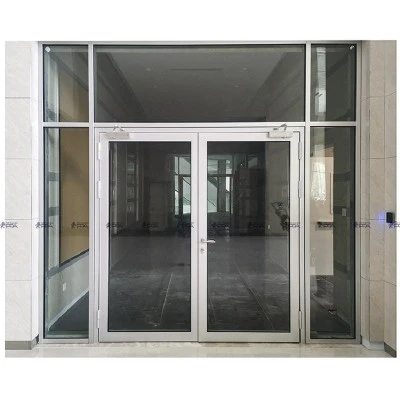
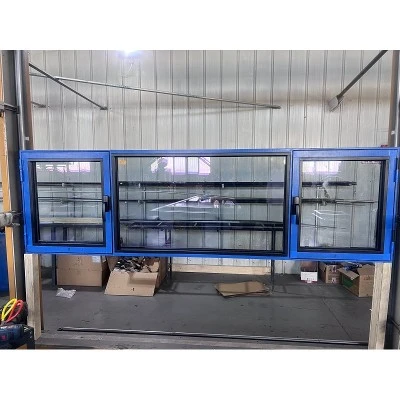
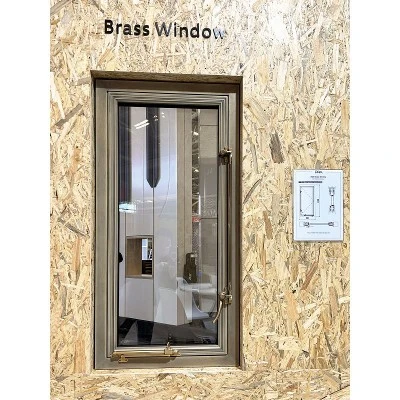



Steel fire doors are fire-resistant building partitions made primarily of steel, possessing a certain level of fire resistance. They are mainly installed in evacuation routes, stairwells, equipment rooms, pipe shafts, and other locations requiring fire separation. Their primary function is to form an effective fire barrier through the door leaf, frame, and internal fire-resistant materials during a building fire, preventing the spread of flames and high-temperature smoke to adjacent areas within a specified fire resistance time, thus buying time for evacuation and fire rescue. Steel fire doors typically consist of a steel door leaf, steel frame, fire-resistant filling material, fire-resistant sealing strips, hinges, locks, and door closers. The interior of the door leaf is generally filled with fire-resistant material with heat insulation properties, while the external steel plate provides protection and support. Depending on the specific needs of different buildings, steel fire doors can be manufactured in various forms, including single-leaf, double-leaf, and those with glass observation windows, and are classified into Class A, Class B, and Class C fire doors according to their corresponding fire resistance performance requirements, meeting the fire separation needs of different building areas.
Steel fire doors are characterized by high structural strength, good overall stability, fire resistance, and wide applicability, making them widely used in industrial plants, commercial buildings, residential buildings, hospitals, schools, and public buildings. Compared to ordinary steel doors, steel fire doors have stricter requirements in terms of material selection, internal structure, and manufacturing process. In particular, they must ensure the integrity of the fire-resistant filling material inside the door leaf, as well as the fit and sealing effect between the door frame and the door leaf. Simultaneously, the products must undergo corresponding fire resistance tests to ensure they meet the prescribed fire protection requirements. In practical engineering applications, steel fire doors must not only consider fire resistance time but also require reasonable selection of door size, opening direction, hardware accessories, closing devices, and installation and fixing methods based on the installation location and usage environment. After installation, the door leaf, sealing strips, and door closers should be checked regularly to ensure that the fire door can close and lock properly. As an important component of building fire protection systems, steel fire doors play a vital role in controlling the spread of fire, ensuring the safety of people inside buildings, and improving the overall fire safety level of buildings.