




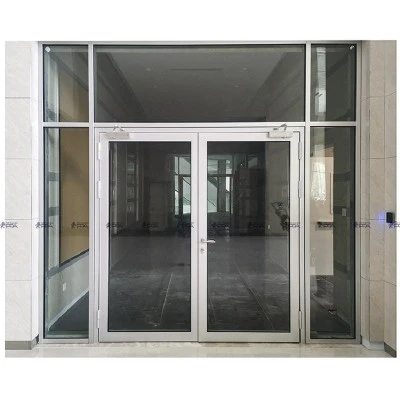
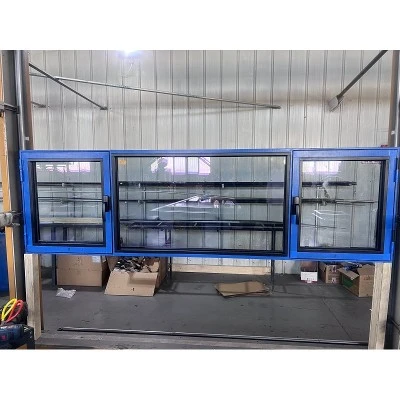




The airtightness of a steel fire door refers to its ability to prevent air penetration between the door leaf and frame, and at the connection between the frame and the wall, when closed. It primarily reflects the overall sealing effect of the door structure. Steel fire doors typically consist of steel plates, a door leaf frame, fire-resistant filling material, a door frame, sealing strips, and hardware. The fit between these components directly affects the door's airtightness. In actual use, if there are large gaps between the door leaf and frame, or if the sealing strips are not installed tightly, problems such as airflow, dust entry, and smoke leakage can easily occur. Therefore, during the design and production of steel fire doors, it is necessary to properly control the fit dimensions between the door leaf and frame to ensure a tight seal when the door is closed. Simultaneously, the installation gaps between the frame and the wall must be filled and sealed according to construction requirements to prevent air from seeping in at the connection points. For applications with high sealing requirements, a dedicated sealing structure can be incorporated into the product design to improve the overall sealing performance of the door.
The airtightness of steel fire doors is mainly affected by factors such as the quality of sealing materials, the precision of door leaf processing, the installation of hardware accessories, and the quality of on-site construction. High-temperature resistant fire-resistant sealing strips are typically installed around the door leaf, providing a certain degree of sealing when normally closed. In the event of a fire, the intumescent fire-resistant sealing material, meeting design requirements, expands upon heating, filling the gaps between the door leaf and the frame, reducing the possibility of flames and high-temperature smoke spreading through these gaps. Furthermore, hinges, locks, and door closers must be securely installed to ensure the door can close automatically or lock properly, preventing sagging, deformation, or incomplete closure that could affect the sealing effect. After installation, it should be checked whether the gaps between the door leaf and the frame are uniform, whether the sealing strip is continuous and intact, and whether there are any obvious gaps when the door is closed. It is important to note that the airtightness of a steel fire door is not entirely the same as its fire resistance integrity, and ordinary fire-resistant sealing strips cannot directly replace a tested smoke-proof sealing structure. For locations with smoke control requirements, fire doors with appropriate performance should be selected according to design requirements to ensure that they meet the building's fire safety and actual usage needs.